Thursday, June 2, 2022

How To work with ANIMALS...


MEM. Survival Guide Cover. 2022


This is the last Humanities AP of our SENIOR YEAR!! For this unit, we dove further into people's journeys and what they have endured. We learned how people can be manipulated through situations and how their journeys can be man-created. We watched a film about child recruited soldiers for both the government and the 'rebels' in Africa, where they were abused, taken advantage of, and forced into giving up their lives. We also heard Malala's inspiring story and how she survived terrorists. In one of her famous speeches to the UN, she gallantly stated that the day they shot her and she survived, "Weakness, fear, and hopelessness died, and strength, power, and courage were born". After learning about their and others' survival of hardships, we were then supposed to write our own 'survival' guide, for this project. My biggest goal is to become a Vet and to have a career working with animals, post-high-school, so I decided to write about that. Below, you will see my guide, and I hope that it might even inspire someone else to follow the same path. Enjoy!


How important are Scientific Theories? The Poster

This is the LAST AP OF SENIOR YEAR!!! For this last project, we were able to choose one of our research papers to then make into a poster. I chose to do my most recent AP, which was the one about Scientific theories - specifically Dark Matter and Dark Energy -  because that was the one that I was most proud of. I used google drawings to create this poster and I basically just summed up all of the important findings in my paper and put it on here, which was surprisingly easy and fun. I hope you enjoy it! 


MM. AP2 Poster. 2022


Saturday, May 28, 2022

How important are Scientific Theories?

This is the second to last AP of our SENIOR YEAR! I can't believe it. Last unit, we learned all about what we currently know of our Planet's Oceans. And, for this unit, we took a little adventure into the great beyond - into Space. We learned about the formation of our Universe, the various theories surrounding that formation, and the Theory of General Relativity (gravity). We learned about the early years of our Earth and its atmosphere, we learned about the early explanations of our Universe and the astronomers who created them - some being Ptolemy (Geocentric model), Copernicus (Heliocentric model), and Kepler (Heliocentric model). We also discussed why Space is so difficult to explore because of its vast size, which led to learning about the ways that we have been able to view other planets, universes, and atmospheres using telescopes and other forms of un-manned technology. Additionally, we looked into current threats to earth, like Space debris, and what the future of our Universe may look like. For this project, we were to write another research paper, centered around a question that we focused that research on. I decided to base my research on the importance of Scientific theories, and I geared it towards the theories of Dark Matter and Dark Energy, which I learned about from reading our course book, Astrophysics for People in a Hurry. Below, you will see my paper, and I hope you enjoy!

How important are Scientific Theories?

Scientific Theories obviously hold value in the understanding of our world, otherwise they would not exist. In fact, they hold so much value that there are many that are used to explain the meaning of our whole Universe. There are theories that explain how our Universe formed, the contents that make up our Universe, and even for how those contents interact. Once they pass certain criteria, we often follow them blindly, when most of the time, we don't even fully know if they are true or if the contents that some discuss, are even out there. However, since it has yet to be disproven and it makes so much sense in its explanation of our natural world, we think 'it must be true', and wait until the day that it is debunked. Two theories that science finds so important, are the theories of Dark Matter and Dark Energy. We still know very little about them, however, what we do know is that coming to fully understand them will help us predict the entire future of our Universe. So, a question that must be asked is how much value do the theories of Dark Matter and Dark Energy hold in our Scientific world?

The first thing to understand is what exactly a Scientific theory is. According to the Field Museum, a Scientific Theory is a speculative explanation for phenomena occurring in our natural world, constructed carefully using the Scientific Method, and, "...which brings together many facts and hypotheses (an idea that we can test with further scientific observations)". So, in short, a theory is not yet a fact, it is a collection of speculation that has further to be studied and has yet to be disproven. A theory must meet several criteria before it is properly recognized. The Field Museum generally explains the process as follows: 1. A scientist makes an observation of a natural phenomenon, 2. They devise a hypothesis for the potential explanation of such phenomenon and further tests this hypothesis by collecting data or designing experiments, 3. If the tests show that that hypothesis is incorrect, the scientist will develop a new hypothesis to test, 4. If the original hypothesis is corroborated (by the data), it will be retained and passed on for further scrutiny, and finally 5. If it survives external scrutiny, the hypothesis may be applied to a larger theory that explains such observed phenomenon and/or relate it to other phenomena. 

After the creation of Scientific theories, comes testing the importance and relevance of them. The ultimate goal for a Scientist is to create a theory that is applicable to modern Science, and that is eventually replaced or revamped with another theory. The NIH says that, "The reason a ‘good’ theory should be testable, be coherent, be economical, be generalizable, and explain known findings, is that all of these characteristics serve the primary function of a theory--to be generative of new ideas and new discoveries." Theories leave room for Scientists to have an explanation for observed phenomena, while not fully knowing everything about it. It allows for the cycle of Scientific explorations to continue so that we will always learn new and 'updated' information about our Universe. There are so many theories out there that Scientists are still testing, however, two that stand out are the theories of Dark Matter and Dark Energy, due to how little we know about them, yet how much of our Universe that they explain. 

Dark Matter

Dark Energy


We can thank Fritz Zwicky for the discovery of Dark Matter and Albert Einstein for Dark Energy. Little is still known about either but a short overview from Astrology.com states that Dark matter slows down the expansion of the universe while Dark energy speeds it up. Dark Matter is the invisible attractive force that exerts gravity, also known as the "cement of the universe", and Dark Energy is the repulsive force in the Universe, or the 'anti-gravity'. They also state that, "Dark energy is the far more dominant force of the two, accounting for roughly 68% of the universe's total mass and energy. Dark matter makes up 27%, and the rest - a measly 5% - is all of the regular matter we see and interact with, every day."

NASA states, "We are much more certain of what Dark Matter is not than we are of what it is." We know that it is not observable (it does not take any physical form), it is not made up of normal matter particles, it is not antimatter, and finally, it does not take the form of any black holes that we have observed. In terms of Dark Energy, we know that it is the mysterious force that counteracts gravity and causes the universe to expand at a different aging rate than what we are used to. It causes it to expand at an accelerating rate, rather than slowing down and it exists in the vacuums of space and also in time. The existence of the whole idea of Dark Energy is heavily dependent on Einstein’s theory of General Relativity, which outlines how everything in the Universe moves under the influence of Gravity. Dark Energy is important because its idea encompasses Einstein’s equations of General Relativity and the functions of the universe - it helps to calculate the past, present, and future of the cosmos and its expansion. 
 
So, what does the future of the Universe look like due to Dark Matter and Dark Energy? Well, there are currently 4 predictions for the fate of the universe. First, there is the Closed Universe, also known as "The Big Crunch", which would be if the actual mass density was greater than the critical mass density of the Universe, causing the Universe to expand, slow down, stop, and eventually collapse back onto itself - essentially Dark Matter taking over. Second, is the Flat Universe. This would be if the actual mass density of the Universe equaled the critical mass density, causing the Universe to expand forever, however it wouldn't have infinite expansion like with Dark energy, it would eventually slow down and become cold and 'dead'. Third is an Open Universe, where the actual mass density is less than the critical mass density, so the Universe would continue to expand with no change in its rate of expansion. And finally, there's the Accelerating Universe, which is Scientists' current and most logical prediction. This is the effect of Dark Energy and Dark Matter on the Universe, wherein it acceleratingly expands, but is kept intact due to Dark Matter. 

In conclusion, Scientific Theories make a huge impact on understanding our world. They help us to create rational explanations for things that we still might not know everything about. Specifically, Dark Matter and Dark Energy, the little that we know about them, gives us a glimpse of the inner workings of our Universe. Once we begin to fully understand them, it can help us learn about what has happened before us and what will happen after us, in the Universe, which is why they are so important. 

Sources

Betz, Eric. “What's the Difference between Dark Matter and Dark Energy?” Astronomy.com, 3 Mar. 2020, https://astronomy.com/news/2020/03/whats-the-difference-between-dark-matter-and-dark-energy#:~:text=In%20short%2C%20dark%20matter%20slows,%2C%20absorb%2C%20or%20emit%20light. 


ET;, Higgins. “Making a Theory Useful: Lessons Handed Down.” Personality and Social Psychology Review : an Official Journal of the Society for Personality and Social Psychology, Inc, U.S. National Library of Medicine, https://pubmed.ncbi.nlm.nih.gov/15223513/. 

In Which Way Does Dark Matter Determine the Fate of the Universe? https://www.researchgate.net/post/In-which-way-does-dark-matter-determine-the-fate-of-the-Universe. 


Blog conclusion 

I really enjoyed this unit. I am a lot more interested in Space than I am of our Oceans, because it is so much more infinite. It fascinates me how much of it we might never reach because it is so vast, but I love to see our estimates of them. This paper was harder for me to write than the last one, just because we didn't have the primary research aspect, and I had less motivation to write this time around. I chose this topic because of how interesting I find the fact that we can base all of our understanding of the Universe on something that has yet to be proven. Overall, I think I did a good job on this project, though I do feel that I should have put more time into it to receive feedback. 

Monday, May 2, 2022

I didn't know so many words began with 'Anal'...

This was the AP for unit 2 of our Humanities class, Endurance. So far, our central focus has been on personal journeys and the meaning of what it takes to endure hardships and challenges. A key term from this unit was Katabasis. Katabasis means, "diving into your underworld", and it is all about finding your way through the dangers around you and it encapsulates the very meaning of endurance. We read stories about individuals who had made their own personal missions and learned about their processes of getting through them. An example is a documentary (called maiden trip) that we watched about a 14-year-old girl from Holland, who voluntarily sailed around the world by herself - it took her 2 years. Another was a magician named David Blaine, who tried to break the world record for having no oxygen in one setting - he made it to 17 minutes. Both of these were a choice, but we also learned about journeys of endurance that were not voluntary. We read Night, a book by Elie Wiesel, written about his perspective and journey of surviving several death camps with his father, during the Jewish Holocaust. We also watched Schindler's List, which gave us a very real perspective of what it took to endure such times and a glimpse of the horrors that humanity can impose on one another. After we gained enough context, we moved into creating our own missions, otherwise known as our Kautilya plan. Our challenge was to document 12-hours of us completing an activity or reaching some sort of goal of our choice. 

For my challenge, my goal was to become more knowledgeable, so I started thinking of ways I could do that and then it clicked - I could read a dictionary! I originally was going to use the Oxford Dictionary, since that was the most popular one that I had heard of. However, when I went to purchase it, it was $100 so I just settled on the Merriam-Webster dictionary, which was just as good and it was only about $5. I connected this back to when I was in homeschool and I set off to start my journey. I found so many words that I either didn't know/didn't know existed, or that I thought had the potential of me using them, and I was able to get through letters A, B, and C. I asked myself a couple of questions along the way and had many times to reflect. Overall, I enjoyed this experience and I definitely feel like I had the chance to broaden my vocabulary. I enjoyed finding words that I thought were funny and making several connections - one discovery I made was the seemingly enormous list of words that began with 'Anal'. I don't know why that just made me laugh and it lead me to be so much more interested in what I was doing. Below, you will be able to see my daily log, my vocabulary notes, as well as my Kautilya plan video. Enjoy!


Wednesday, April 27, 2022

Who is responsible for the fate of our Earth?

This is one of the last APs for our Senior year STEAM class! This class is called Frontiers, and we spent our first unit learning about Ocean exploration, anatomy, the climate, and our future as a planet. We learned key terms like Geo-engineering, Ocean Acidification, Oceanic Zones, and any other aspects of ocean life, functioning, and how humans impact our oceans and climate. We watched a documentary featuring Jacques Cousteau - a renowned Ocean explorer and climate activist. We learned about his contributions to our knowledge of the Ocean and its inhabitants, and also our global progress in climate change awareness. We also had an FE where we visited Urban Rivers. There, we got to experience first hand the work they are doing to re-instate river banks, via floating plants structures. It is a part of their 'Wild Mile' project. We learned a lot this unit. For this project, we were challenged to use our knowledge of the Oceans and push it forward. We were to come up with a question, summarizing specific research we would like to conduct, which included both secondary and primary sources. For my research, I was interested in finding whether or not individual actions really make an impact on the climate. I also sought out to find if it is only up to individuals, or if there are other parties that play significant roles, as well. You can see my 3 page paper, below. Enjoy!


Who is responsible for the fate of our Earth? 

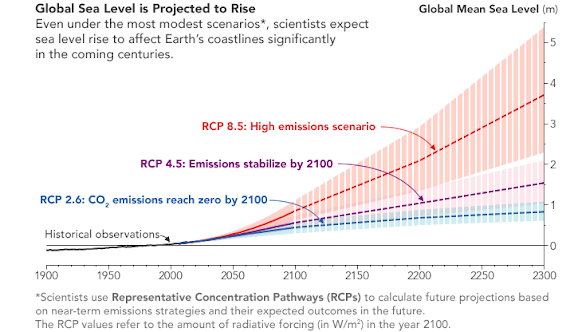
            From young ages, we are taught the three R’s; Reduce, Reuse, and Recycle. We are told that these three things can save the world, if everyone were to do them. However, can and should the fate of the climate and the human race, really be left in the hands of the individual? Or does the responsibility fall on someone bigger? According to NEEF, the global temperature has risen almost 2 degrees Fahrenheit since the early 1900s and the sea level has risen almost 10 inches and shall continue to rise at staggering rates (see graphs below). This can be drawn back to many things but a main reason is the rise in the human industrial impact and our usage of Fossil Fuels. The damage seems to have been primarily done by major corporations but they don’t seem to want to take responsibility. In recent years, there has been an enormous call for action and it looks like, for right now, the responsibility to fix these mistakes has been placed on individuals. Simple solutions have been proposed like the three R’s, but are these enough to reverse the damages? Do individual behaviors really make an impact on the climate? 


Global Surface Warming

Global Sea Level Rising


             To begin to find the answer to these questions, a synthesis matrix was used to organize a list of 5 secondary sources and 5 supporting ideas to my research. The first topic of research was to find a more in-depth list of ‘at-home’ climate solutions, than just the typical three R’s. NOAA had the most detail and they suggested composting (overall limiting of waste), Reduce - Reuse - Recycle, biking more - driving less, educate, volunteer, conserve water, choose sustainable food, shop wisely, conserve electricity, garden (plant trees), and reduce use of harmful chemicals. 

            After finding these, the next topic of research was to find the ‘true impact’ of these solutions, and to see if they really are as effective as they seem. Block Club Chicago explained how the city of Chicago’s recycling rate is low at 8.8%, compared to other major cities like San Francisco and Seattle who’s recycling rate is at 60-80%. So, if recycling is your main choice of impact (and you live in Chicago), it really wouldn’t make much of a positive environmental difference. The effectiveness of certain solutions clearly depends on your geographic location and external research. 

            The next piece of the puzzle was answering the question, should the fate of the climate be left in the hands of the individual or someone bigger? Upon looking at a couple of sources, the conclusion came to be that it is neither the responsibility of one or the other (individuals or corporations/policy makers), but both. Again, from NOAA, they say that, “Protecting our planet starts with you”, however, it can’t just end there. From the Sierra club, they state, “Yes, actually, individual responsibility is essential to solving the climate crisis … but the environmental movement needs to sustain a way to do both: agitate and organize for systemic change while also still encouraging individual behavior changes.” And lastly, from WEF, they say that, “Without the support of policymakers, businesses and other organizations, the transition [into the future] may not happen quickly enough to stay under the 1.5° Paris global warming target."

            Finally, where do we go from here and how do we transition into the future? The answer is the continuation of individual, corporate, and policy responsibility, as well as renewable energy. Solar, Wind, and hydro power could reframe our future, and it is very possible. WEF states that 100% clean renewable wind, water, and solar power should be implemented no later than 2050, and at least 80% should be implemented by 2030. Cities will also be transformed into ‘super grids’ and we will no longer use Fossil Fuels. 

            In Addition to the secondary research, there was also primary research that was conducted. In order to get individual perspective, a survey was sent out, asking everybody a series of questions. The questions were: 

1. What, in your opinion, is the most pressing matter in regards to the climate and the preservation of the Earth? 
2. Have you ever heard the phrase, “Reduce, Reuse, Recycle?” 
3. If you have, have you ever tried to implement it into your daily life? 
4. How did that go? How effective or practical was/is it? 
5. Are there any other simple climate solutions that you have heard of? 
6. How effective do you feel like those are - are they influential enough, do they actually work, do you think people are moved to abide by them? 
7. What do you feel is the best way to spread knowledge about climate change? 
8. Do you think these simple solutions are enough - especially if everybody implemented them -, or are there more powerful decisions that need to be made? Explain. 
            
            There were a lot more responses than anticipated, however, most people had the same or similar responses. 
            
            Many people’s first concern relating to the Earth was Global warming - related also to sea level and temperature rise, Ocean preservation, and our heavy reliance on Fossil Fuels. When asked if they had heard of the phrase, “Reduce, Reuse, Recycle”, 16/16 responders said ‘yes’. The typical answer for if they had ever implemented this into their daily life, was a lot of agreement that they tried to but it was either too hard to keep up with or they felt like it didn’t really make enough of a difference. 
            
            There were also many other ‘simple’ solutions that people listed that were not explicitly mentioned in the secondary research; these included turning off the lights, not having children, shopping locally instead of online, ‘unplugging’ for a bit, using reusable products, investing in greener homes, transitioning into walkable cities, putting pressure on corporations and policy makers and, “uh use more nuclear fuel but don't let it go boom cause that's bad”. When asked if they felt like those solutions were influential enough to actually work, the main response was, “Not enough people feel the urgency”. This leads into the many ways that we need to spread education and the urgency to the mass population, some of them being media, advertisements, TV, News, and exposés. 

            The last responses that were given were the conclusions on who should take responsibility for climate change. Two responses that were similar and basically summarized everyone else’s statements were: “I think if everyone took part in these solutions, while it wouldn’t fix the problem, it would heavily cut down its growth - I think bigger measures are needed to be able to completely fix the planet,” and, “Both need to happen. People need to do small practices, and there are big legal decisions that also need to be made. For example, not burning as much oil.” 

            In conclusion, it is neither just individual or corporate responsibility, but both. The whole population as a collective needs to come together to move us forward, into a sustainable future. So, simply put, the future of the climate and the planet rests in everybody’s hands, since everybody living on this earth is affected by the consequences of not taking care of it. Lastly, this research connects to SDG 14 because it shows who needs to take responsibility and who the responsibility has been currently placed on. It shows how most individuals are willing to do something for our ocean, climate, and species conservation - now it is time for those in power to do the same. 


Sources 


US Department of Commerce, National Oceanic and Atmospheric Administration. “What Can I Do to Protect Coral Reefs?” NOAA's National Ocean Service, 10 Aug. 2009, https://oceanservice.noaa.gov/ocean/earthday.html. 

Bauer, Kelly. “Chicago Recycling Rate Gets Even Worse at 8.8%. New Laws, More Composting Could Change That, Report Says.” Block Club Chicago, Block Club Chicago, 15 Nov. 2019, https://blockclubchicago.org/2019/11/15/chicago-had-a-recycling-rate-of-just-8-8-last-year-new-laws-more-composting-could-change-that-report-says/. 

“Yes, Actually, Individual Responsibility Is Essential to Solving the Climate Crisis.” Sierra Club, 4 Dec. 2019, https://www.sierraclub.org/sierra/yes-actually-individual-responsibility-essential-solving-climate-crisis. 

Written by Johnny Wood, Senior Writer. “Renewable Energy Could Power the World by 2050. Here's What That Future Might Look Like.” World Economic Forum, https://www.weforum.org/agenda/2020/02/renewable-energy-future-carbon-emissions/. 

“Goal 14 | Department of Economic and Social Affairs.” United Nations, United Nations, https://sdgs.un.org/goals/goal14.


Blog Conclusion

Overall, I enjoyed this project. I like all of the research I conducted, especially making and sending out a survey to people - I felt so official. I think I did well organizing my findings, though this project did take me a while. I was very interested in the topics of the Ocean, and it still fascinates me how little we really know about the Ocean. 

Friday, April 1, 2022

Thursday, March 10, 2022

Taxes in 2122

This is the last AP for our Humanities class, Equality. In this unit, Hxstory, we further dived into the topics of Race, Gender, and Class, except this time, we focused more on the present-day relations of each category and acknowledged how history got us to each of these points. In this unit, we discussed the value of learning accurate history, systemic racism, critical race theory, feminism (how it started and how it's defined now), social class and poverty, income inequality, and the current race, gender, and class relations in the U.S. We watched a couple of Trevor Noah videos on history and CRT, we listened to Talking while Black, talking about a recent racist incident at a high school, we read Bad Feminist, talking about how Feminism is now defined and misunderstood, we watched Roger and Me, which centered around GM factories closing in Flint, and we ended with a couple of crash course videos on Social Class. My favorite part about this unit was learning about the current class status and inequalities in the country because I feel like it says a lot about our society and it also draws race and gender into it. After going in-depth about all of these topics, and learning about how history gets us to where we are and carries us into the future, we were challenged with our project. For this project, we chose a specific event or occurrence that we thought would happen in the next 100 years (by 2122). It could be any prediction of a policy change or status of a certain movement from today (2022) and were to create a 'news' segment on it. For my topic, I chose to imagine the status of the Tax the Rich movement and if there had been any progress. I report on a new piece of legislation that was passed, called the Equitable Tax Act, which focuses on the upper, middle, and lower class each paying their share in taxes. Below, you will see my video and script. Enjoy!


Script

March 3rd 2122 

Intro 

Good morning, daily viewers … Today is a very significant day. The date is March 3rd, 2122 … Taxes are due in April. It couldn't be a more perfect time for the Equitably Taxed Act to be passed. After a lengthy 100 years of the Tax the Rich movement, and the near destruction of the lower and middle class, long-awaited action has finally been produced and Axolotl Musk, who you may know, was the first to experience it. 

Body 

Before I quote Axe, let me first give a little context on the legislation, and what we had to go through to get it. Tax the Rich has been a movement for over 100 years. It started, as it says on taxmarch.org, as, “a movement, a rallying cry, and a way of thinking. It's about fixing a fundamentally broken and rigged economy so that it works for all of us…” And then goes on to further explain the history and status of the current economy (a hundred years ago), and so on. Anyways, so throughout this last century or so, there were marches, riots, proposed bills, and countless efforts made by leaders or public figures that were a part of the movement, to introduce and pass actual legislation. And after years and years of trying and trying again and again, an Act finally went through. The Equitably Taxed Act federally ensures that people are taxed based on their income, instead of a fixed percentage, and there is to be more education about taxes, and therefore, fewer loopholes that the upper class primarily is able to take advantage of. The problem that this is going to solve is that in the past, technically the low income and higher-income people were being taxed ‘equally’, however, when you look at the bigger picture … you can see the vast differences in how much each class was paying and how it affected them, separately. To put it into perspective, imagine an upper-class individual, who makes $200,000 a year, and a lower-class individual, who makes $25,000 a year, both have to pay $700 in taxes. While that amount is equal, the effects on either one are heavily unequal. The $700 in the upper-class person’s wallet is barely a dent, but for the lower class individual, that could be almost a full month’s salary. With this new Act, each class will be taxed a percentage based on their income, so no one person pays more than the other - they just pay what they can based on how much they make. A lot of other fundamentals of the Act were also inspired by Axe’s contributions to her grandfather’s business … which I’ll mention shortly. 

The granddaughter of Elon Musk, a renowned billionaire who has found his new home on Mars, was the first to see this act go through. She filed her taxes on March 1st, and she noted that she happily paid significantly more than she had the year before. She then said, “I think my grandfather would be proud if he were still down here - I am thrilled to be a part of such progress and hopefully this will do enough to restructure the lower and middle class. I think it is time that we widely hold the upper class accountable and start to rebuild our nation and economy, hand-in-hand.” 

As you know, Axolotl Musk is a member of the upper class herself, being an heiress to her grandfather’s empire and all, but from a very young age, she has familiarized herself with the suffering of the lower classes in the country. She has been an influential leader in the Tax the Rich movement, and an active participant in her grandfather’s empire - especially dealing with funds. She has always pushed for the money made in the business to be primarily redistributed externally. She created new jobs and opportunities, supported environmental organizations, and donated whatever she could. After all of her hard work and success with the business, congress decided to make these key elements part of the Act as well - there is now the promise of new jobs, environmental stability, and better usage of gov. funds. I think it is safe to say that she is a very crucial figure to the movement and to the passing of this Act. Those who are in favor of it are very happy for her to be one of the leading faces and I am extremely enthusiastic to move on into our future, following this event. I can’t wait to report further on what is yet to come and see our country’s economy be rebuilt and for the American people to feel united and supported. 

End

Well, we’ll see you tomorrow … bright and early at 9am! Start your day Chicago…. Peace out. 


Conclusion 

I hope you enjoyed the small news segment! Overall, I really enjoyed doing this project. I thought it was fun imagining what might happen in the future because it could really be anything I made it to be. It was a little hard to write out the script at first and for me to figure out how to structure the video, but all in all, I am pretty happy about how it all turned out. If I were to do something different, I would have probably added more visuals and pop-up graphics to make it slightly more engaging. However, I am proud of my work and would love to do something like this again. 

Works Cited

“It's Time to Tax the Rich.” Join Us in Asking for a Real Debate on Taxes., 1 Mar. 2022, https://taxmarch.org/.

Can you have a conversation with a computer?

This is our last project for our Coding workshop. In this unit, we really focused on if, elif, and else statements. Through this, we learned how to further give the computer more in-depth instructions. We also learned about Booleans, which are a part of if/elif/else statements and they can be true/false, less/greater than or equal to, etc. They are essential to setting up the result of the rest of the statement. The last thing we learned was (#)comments, and they are basically just notes that you can leave yourself in the code, that the computer won't read. For this project, we were challenged with making code that allowed us to have some sort of 'conversation' with the computer - like a chatbot. Below, you will be able to interact and answer questions, using my code. Enjoy!


I hope you enjoyed that mini conversation! Overall, I really enjoyed making this project. Usually, it takes me a while to construct these but once I had an idea it was just smooth sailing from there. I feel like I've really come to understand and have fun with code and I would love to do something like this again. If I had more time, I might've made the conversation a little longer, but I am happy with how it turned out. Thank you for interacting with my project!

Monday, February 28, 2022

Mega-Thrift

This is our AP for our 2nd unit of Social Entrepreneurship. We covered a lot in the duration of this unit since it spanned over a period of 5ish weeks. We learned a lot about what it means for a business to be a Social Enterprise - some of the main themes were serving the public and working to solve a common social issue. We did a lot of exploration of mission and vision statements, business structures, marketing strategies, and what makes a business successful. We also looked at multiple social enterprises and analyzed their structures and mission/vision statements to see how they were operating. We had multiple guests - some of them being Sharon Cho, Felicia Winiecki, Ian Mackey, the Allstars program, and we also visited UChicago's NSP. Overall, we gained very helpful insight as we lead into creating our own business idea. After indicating a social issue we wanted to solve, we went on to create logos, brainstorm legal structures, business models, our business purpose, and how we would work to improve the future. Below, you will see my business, enjoy!

Mega-Thrift 

MEM. Mega-Thrift Logo. 2022

Context 

For the past couple of years, I have been pretty passionate about the current issues surrounding the well-being of our planet and specifically, how wasteful our country is. In one year (2018), the U.S. produced 292.4 million tons of solid waste and I think that is a direct consequence of there not being a designated place to send some of this waste, other than a landfill. I experience this myself where I throw away products that were not all the way used because I moved on to new ones, or I throw away food because it sat in my fridge until it expired, or I give away clothes that I never wore, etc. But as I discard these items, I never stop to think about where they go, and even if I do donate some of them, I can never be sure if they will be rebought or if they will just continue to collect in a facility, similar to if it were in a landfill. 

Along with the amount of waste in the world, there is also the growing issue of individuals who live in poverty or who are homeless in this country. There is also the concern of affordability of products that I consider to be basic needs - quality clothing, food, and hygiene/sanitary products. In 2018, 29% of the population was considered lower-class, in 2019, 13.4% of the population was below the poverty line, and in 2021, 0.2% of the population was homeless. Many lower-income communities also live in areas where the local supermarket, convenience store, or clothing store, could be miles away. They don't have money for a car, and there is often no constant form of public transport. So, how do these people get their food, clothes, and hygiene products? 

Oh so conveniently, there are many fast-food places that find their way into these communities, and since they are cheaper options, many people are forced to eat there. There has also been a rise in Fast Fashion and online stores like Shein, which produce clothing at a heavily cheaper cost than main fashion brands. Even though these items may cost less, they come with a much higher moral price. Brands like these are able to price clothing so low because they operate in countries where the labor laws are much looser, and they can get away with paying workers little to no wages, and they overwork adults, as well as children. They also have huge environmental impacts because of factory emissions and textile waste. This also leads to product production. A lot of cheaper options for makeup, shower products, personal hygiene items, etc are made with toxic chemicals and they also often test on animals. Unfortunately, the companies that produce more sustainably are smaller, so in order to stay afloat, they have to price their items higher. Consumers with less money are forced to continue to buy the more toxic options, and the 'clean' sustainable option is considered a luxury. It is strange that in this society, taking care of yourself, getting proper care, and having access to nontoxic food, products, and clothing are considered a luxury instead of something everyone is able to have. 

Collecting this data was important in assessing the reason for my Social Enterprise and how it could possibly work to respond to this issue. While my idea can't necessarily solve poverty, hopefully, it can work to make it easier for those who fall into that category. 

My business

My business is called Mega-Thrift. Similar to Goodwill, it is a place where anyone who is able can come and donate items they no longer find a use for. However, I wanted to think bigger than just clothes and home goods. People at Mega-Thrift can come and donate clothes/seasonal-wear/accessories they no longer want, food that is just collecting dust in their fridges or cabinets, and any toiletry/sanitary/hygiene products that they may have extra of. The only requirement is that anything that someone brings should be in the condition to pass onto someone else. Meaning, the things you are prepared to donate should be in like-new or good condition - preferably not heavily used. It is a place where homeless and low-income families can come to get whatever they need (within moderation), completely free of cost. My overall goal is to save the planet from harmful and unnecessary waste and especially to give people the chance to access basic needs, that they wouldn't otherwise have. Another main goal is for this to be open to everybody. I don't want it to be exclusive, and the business puts trust into recipients to be people of actual need and that people would not take advantage of taking free products from those who really needed them. 

Along with clothing, products, and packaged food, Mega-Thrift also offers free showers, dressing rooms, and places to cook your food and come and sit for a while. Though spaces are limited, there are jobs (primarily for homeless people) and support offered to give them the opportunity to get back on their feet. Mega-Thrift is a non-profit so it survives based on people's generosity and donations, along with government funding. It also primarily relies on volunteers but there are employees as well - their salary is also provided by government funding. 

Day-to-Day specifics

In terms of schedule, the day would start at 8 am and end at 8 pm. The facility would be opened and prepped by employees, getting the space cleaned up from the day before - showers stocked with towels and products, dressing rooms cleared out, eating and cooking area fixed up and sanitized, donation bins emptied and everything is taken to be displayed, etc. Once that is all done, the doors are opened and people can come in and out at their leisure. Donations are accepted for the duration of the day and volunteers can sign up for shifts from 9am-7pm but they can only work for a max of 4-hours at a time. Upon arrival, folks can stop by at the front desk and receive a 'proof of donation' receipt. They will then move onto the bins where their items will be assessed and placed in their designated bins. If someone's donation is money, they can drop it off at the desk and they will receive a different type of receipt which acts as a tax right-off depending on the donation amount. I hope for this to be a beneficial service to the public and for us to give back to our surrounding community. Along with us giving back, Mega-Thrift also provides the opportunity for others to give back as well. There is a volunteer program that gives college and school credit for students (under 18 requires a parent or adult accompanying them), and just an overall feel-good sense of achievement to anyone who signs up to help. 

Future

For right now, Mega-Thrift is just going to be located in the loop of Chicago, but in the future, I hope to expand Nationwide and further eradicate these problems across the country. I hope to make the most out of my Social Enterprise and that it will be received well and actually succeed in its purpose. Additionally, I hope to eventually make the business double as a community center and a shelter. 

Social-Media post

An effective strategy for marketing these days is Social Media. Below you will see an example of an Instagram Ad for Mega-Thrift and its Mission and Vision statement, Business model, and Real Tangible Change.


I hope you enjoyed learning about my business idea. All in all, I really enjoyed spending time brainstorming my business idea, especially because I am passionate about solving these issues. It was a little difficult to figure out some logistics, especially because I didn't realize how much detail has to go into creating a new business. I still don't even feel like I've included everything. That is probably something I'd add if I had a little more time - more numbers (stats) and detail about funding and the money management aspect of my business. Overall, I am proud of what I was able to come up with. Thank you for reading! 

Thursday, February 17, 2022

Who knew you could use Code to do math or write a letter?

For unit 2 in our Coding class, we dove into python and worked on two projects centering around the ideas of our Humanities and STEAM classes. For our STEAM class, we were able to make a calculator, focused on any math equation we had had in the past, and for our Humanities class, we formed a letter to someone, by using key input words - it was basically structured like Mad Libs. Below, you will see the behind-the-scenes for the actual code, and then you will be able to try it out!

Behind-the-scenes:
 
Calculator code
Letter code


Project A - STEAM

Project B - Humanities


I hope you enjoyed interacting with my code! Overall, I really enjoyed these projects. There was a little bit of frustration along the way, sometimes as code gets tedious, but once I figured it out it went smoothly. When I know what I'm doing coding can be really fun, and I would definitely do this again. 

Monday, February 14, 2022

What are we prepared for?

This is the first Action Project for our Humanities class, Equality. We covered a lot in this unit, specifically topics on race, sex, gender, and class, and the history of those throughout American society. We also learned about the meaning of the inequalities within these categories and key terms like racism, sexism, and classism. Some other notable things we went over were white privelage, white supremacy, the history of discrimination against people of color in America, feminism, toxic masculinity, disproportionate class inequalities, the trap of the "American dream", and America's obsession with wealth, greed, and consumerism. We had deep discussions about our thoughts, brainstormed ideas, asked questions, and overall, grew on our information and exploration of these topics. 

We also had a couple FEs - one from a border defense lawyer, and the other was a woman who taught us about Zines, which is what we ended up making for this project. On that note, for this project we were challenged with creating our very own Zines, focused around retelling an event or concept from the perspective of or in favor of a marginalized voice's point of view. I chose to talk about the history of gender discrimination in schools, and society's construct of Men and Women's roles. I also wanted to include how trans and non-binary people are treated because there are more than just two gender identifications. Below, you will see a GIF of my physical Zine and then it in a slideshow form. Enjoy!

My Zine:

MEM. Zine GIF. 2022 


I hope you enjoyed looking over my project! I also hope that you might have gained some insight as to how our schooling affects us going into society and the constructs that have been placed on us in the past and still today. Overall, I really did enjoy doing this project. This is a topic that I am passionate about and I liked researching, writing, and the process of creating and physically building the Zine. It was a little challenging to get started on what to write since there is so much to say about this topic, but once I got going, I feel that I made a pretty strong project. If I were to do things differently, I probably would have added more images or more appealing imagery, but all in all, I am happy with how it turned out. 

Saturday, January 22, 2022

How's our Communication?

This is the first AP for our STEAM class, Social Entrepreneurship. In this unit, we dove into the psychology of companies, how they operate successfully, and how they build trust within their community. We learned about I-O psychologists, consultants, and SWOT analysis, and how they all contribute to problem-solving and the smooth functioning of companies. We even had a visit from a consultant, where she gave us in-depth insight into her work and how SWOT analysis works. We also learned about Maslow's Hierarchy of Needs and the Tragedy of the Commons. This gave us a little bit of context as to how we function in our daily life, and how we can use it to be beneficial to humans as a whole. Learning all of this eventually led up to our Action Project, where we got to conduct our own SWOT analysis, to try to find a resolution to a problem we identified in our own school. Below, you will see the problem I identified and my SWOT analysis interviews. Enjoy!

How's our Communication?

For this project, I started thinking about what I wanted to improve about GCE. There wasn't much I was able to come up with because I was pretty happy with how things are currently going. I tried remembering my classmates and my past conversations about this topic because I knew we had talked about it before. Pretty quickly, communication came to mind. More specifically, the depth of the information in our weekly emails, information about FE's, and class schedules, and how I don't always feel like I am prepared enough with the information we are given. Once I figured out my topic, I started thinking about who I wanted to interview to perform my SWOT analyses. Our requirement was to interview 2 staff members, 1 classmate, and 1 non-classmate. I chose to interview my Junior year STEAM teacher (ACL) because I felt like he had been involved in the communication process before so I wanted to get his perspective, my current STEAM teacher (HK) because he is new this year and I also wanted to gain his perspective on how well he felt communication was for him, my classmate (CDH) because we had talked about this before, and my non-classmate friend (KH) because we had also talked about this topic before. I gathered a lot of very helpful information, as each interview was 15+ minutes, and I was able to condense it all into 4 individual SWOT analyses, and eventually, into one final one. Below, you will see a slideshow of everything I gathered. 


After conducting each interview, I had to start thinking about a resolution for this problem. Was there even one that was possible? I gathered a lot of different perspective solutions that ultimately inspired my own, but I definitely think there are many solutions to this. The main points that stood out to me were that we are a small school so we are easily adaptable and thus can implement new ideas pretty smoothly, however, being a small school also means that there limited resources in terms of staff. Many of the solutions that we came up with, would be difficult to implement because, with such a small team, someone would have to commit a lot of their individual time. Some of the best solutions I heard was a tier system of emails you could subscribe to; tier A and B - A being basic information (dates, events, etc), and B being a more in-depth email with explanations. The other was just where the basic information is bolded at the top of the email and then you can scroll down for the more in-depth information as you please. The problem is that many students don't even read the emails so someone would put in their time to write an in-depth email that half the school will pay no mind to. With the solution I came up with, I wanted to have a sort of 'middle-ground' between the ones from the interviews. 

My idea is to still continue weekly emails (at the end of the week or beginning) and put the more important and basic information (dates, events, timeline, future FEs, etc) in that email so students will be inclined to look it over. Then, for the students that want more specific information, there can be a link to the GCE website that takes you to a specific section that has everything you would ever want or need to know, written there. This would be easier so that as new information comes up, someone can just update it on the website instead of having to write a whole new email, and it is easier to have one designated space to find everything. That way, students won't have to overwhelm the teacher's resources and seek out different staff members, because it will all be accessible, avoiding the Tragedy of the Commons. 

Friday, November 12, 2021

Spooky Stories

For Fall Term, I decided to take the Podcasting workshop. I joined because I never really listened to them before, so I was interested in learning more about them, and eventually, making my own. Over the course of a couple months, we lead up to making our own Episodes, of whatever topic we wanted. I chose to read spooky stories from the book Ghosts of the White City because I was inspired by true crime podcasts that my friends listen to. I read a chapter that was about two brothers, in the 1800s, who owned a funeral parlor and who were conducting secret experiments in their basement. They would keep bodies, typically who had not been claimed by family, and the main goal of the experiments was to find a new way to preserve them, by turning them to stone. Below, you will be able to listen to my trailer for the Episode 1: The After Death Experiments.

Wednesday, November 10, 2021

Influential voices

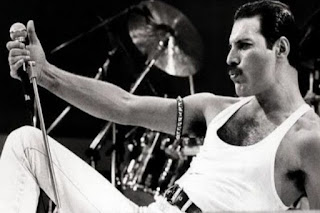
This is the last AP of our Fall term Humanities class, Journalism. In this unit, we focused on the significance of people's voices, specifically those who have been influential in the past century. We also learned key terms that make up the characteristics of someone's voice, such as, pitch, rhythm, timbre, tempo, and volume. Then, we watched a series of videos by Ira Glass, a known radio personality, where he described common mistakes of beginner podcasters or radio show hosts, ways to tell a story and engage the audience, and he also critiqued one of his first shows. We also sampled writing our own transcripts from a popular podcast of choice, in preparation for this AP. For the project, our goal was to choose a voice that we personally felt inspired by, in the last century, and create a podcast talking about their impact on two other people. I decided to feature Freddie Mercury's voice in my podcast because his and Queen's (the band he was in) music has been a big part of my household growing up. For my interviews, my teacher gave me the cool idea to interview someone who was alive during his time (my other teacher) and someone who was a part of my generation (my brother). I think the audience of my podcast could be anywhere from people alive during his time to my generations' age because of how his relevance and impact are still prevalent. Below, you will see an image of Freddie's iconic performance at Live Aid in 1985 (which I talk about), and my podcast describing his importance. Enjoy!

Freddie Mercury

Freddie Mercury. Firstpost. 1985


Transcript

MM- Today we'll be talking about Freddie Mercury. I'd say he's probably one of the most influential voices of the 20th century. He was born in 1946 and then died in 1991, unfortunately, due to AIDS. But he he was one of the most incredible singers of his time and changed so much with his band, Queen, just with the music industry as a whole, creating individualism, I think, and changing the way the standard and not fitting in a box. They did their own thing and people loved it. And they're still very influential today.

MM- I think they're still very relevant, especially to my generation. So I interviewed two people about their thoughts. One person was alive during the time that Freddie was and then the other is my younger brother, so kind of trying to get perspectives on the two divides in generation. So today I'm going to ask you some questions about Freddie Mercury.

ACL- Wonderful.

MM- So you lived when he was an artist. Well, when he was still alive. And do you remember the first time you heard about him or, like, listened to his music?

ACL- I don't remember the first time off the top of my head, but I'm imagining was probably on MTV. I grew up and MTV was a big social phenomenon, cultural phenomenon. So definitely, I would imagine I heard his songs or Queen songs on MTV. I probably saw some of their music videos.

MM- Because they were very different from a lot of artists that had been singing before. Do you remember feeling some sort of impact or, like, how did it impact you? How different they were from other people?

ACL- Yeah, that's a tough one, because full disclosure, I wasn't alive for a lot of their career. I was born in 85, so I was still very young, maybe in some of their biggest days. But I think even with some of their music videos, there's, like cross dressing and things and some of their songs maybe give you hints that they're kind of going beyond. So obviously, they're extremely talented. But even their performance at that big festival, I can't remember the name, but you probably know what I'm talking about.

ACL- The famous one that was in that movie as well. I could tell that they were kind of a little bit different. And Freddie Mercury, as a front man, is a little bit different. There's definitely a big sort of cultural phenomenon of like Freddie Mercury and what he represented and what he went up against and everything he did, like in the face of all this scrutiny and things. So I think over the years has become more apparent, at least for me of my early age, I was just like, this is great music, that's all that matters.

ACL- But I think as I got older, as I was performing music and cover bands and playing it with friends at different shows and venues and things, it became pretty clear that no, this is bigger than just the music. This is about what it represents, what they're fighting for, kind of that sense of their role models for a lot of people. And I think a lot of people look to Freddie and the rest of the band for, like, inspiration, especially when they're going through rough times, which I think is pretty awesome.

MM- Yeah.

MM- Thank you so much.

ACL- You're very welcome.

MM- Hello.

OM- Hello.

MM- So I'm here to interview you about Freddie Mercury, because I know you are a big fan of Queen, and you went through a little what's that song? Another one bites the dust phase where you would play that all the time. Yeah. My first question is, since you were not alive during the time of Queen and Freddie Mercury's influence, how do you feel like it is influencing you now being part of almost two generations later?

OM- I feel like I'm a part of the culture, if that makes sense, because a lot of the songs I listen to are of that generation, and it's interesting to hear the music and to see how it still is relative. Like, some of the songs are like, about inequality and stuff and how that's still around and others are about peace and things like that and people can still relate to it.

MM- Yeah.

OM- It's like something people can still relate to, and it's interesting to look back and you're like, oh, this song must have been made recently because the events are somewhat the same. And you see, they're made in, like, the 60s or 70s or whatever. I don't know. I just think that's interesting. And then Freddie, I just love his music. He's a really good singer, and my friend showed me the music, and I don't know, I liked it. Yeah.

MM- I definitely think Freddie's voice is a unique voice that I feel like hasn't been replicated since his time. And he did things that a lot of other singers couldn't do and opened up. I think the music industry to being what it is today with a lot of, like, I don't know, just more free spirit and individualism. And, like, not fitting a box.

OM- I do believe they actually created their own genre of music, too, which is very interesting.

MM- Yeah.

MM- Well, thank you for coming here today.

OM- Short and sweet, right. 

MM- Ow.


Our own Chapter

This is the last AP of our Fall term STEAM class, Econ. In this unit, we dove into the fundamentals of economics, and especially the concepts of a Circular Economy. The main basis for our coursework was the book Doughnut Economics, by 21st-century economist, Kate Raworth. The book is essentially about the economic Doughnut model, which, "...balances between essential human needs and planetary boundaries". The book outlines, "7 Ways to Think Like a 21st-Century Economist," each implemented into their own chapter. We also visited Plant Chicago, which helped us understand the Circular Economy, using Aquaponics. In preparation for this project, we were assigned groups and we each read, summarized, and presented our own chapters. So, after understanding how the book is structured and the substance in the chapter we read, our goal for this project was to create the beginnings of an 8th chapter. I chose to build off of Chapter 3 in the book, which was called "Nature human Nature". Below, you will see my summary and commentary for the beginning of my 8th chapter, "Change your Behavior". Enjoy!

Change your Behavior 

Chapter 8 model. Noun project. 2021

    Have you ever stopped to really think about your behavior throughout the day? All of the choices you made, conversations you had, and actions you performed? Or in this case, environmentally, all of the trash you passed on the street that you paid no mind to, every wrapper, cup, utensil, straw, or disposable item you used, that you carelessly discarded? There are many ways that we need to change our behaviors, in order to support our environment for the future. In Chapter 3, there was mention of an economic model that needs to change, now we need to use economics to change the environment. We need to spar away from our own self-interest and start to act in the interest of other people, or at least create a balance between the two. We also need to change the way we consume, produce, dispose of, problem-solve, and much of our current capitalistic system. Instead of an “every man for himself” ideal, we need to adopt an “everyone helps everyone” mindset. Much of what we have now, are short-term fixes, but we need to support long-term ideas. There are so many systems that are already in place that run on using, reusing, and recycling energy, resources, food, clothes, etc. it is just about taking what we already have and putting it on a bigger scale.

    In Chapter 3, we talked about our current economic model, Homo economicus. It included how the model affects us, and how it will affect us in the future, if we do not change our actions. Kate Raworth said, “There are, most likely, going to be more than 10 billion of us by 2100. If we head towards that future continuing to imagine, conduct, and justify ourselves as Homo economicus- solitary, calculating, competing, and insatiable- then we stand little chance of meeting the human rights of all within the means of our living planet”. This introduces us to how we need to change our ‘norm’ for our environment. One person that we can seek inspiration from is Gary Becker. He started the work, changing what we thought about economic decisions from investment-based incentives to self-interested behavior. Now, we can take it one step further, and start to incorporate acting in the interest of others, instead of just ourselves, which you can see in the model above. In order to do this, new incentives, appeals, and resources need to be implemented. To start with some of these appeals, there are many statistics about waste. According to SDG 12 (Responsible consumption and production), there is an average of 7.3 kilograms of electronic waste per capita, but only 1.7 is recycled. Additionally, in the United States alone, there are over 108 billion pounds of food waste, 17million tons of textile and clothing waste, and 292.4 million tons of other solid waste produced each year.

Sources 


“Gary Becker's Concept of Human Capital.” The Economist, The Economist Newspaper, https://www.economist.com/schools-brief/2017/08/05/gary-beckers-concept-of-human-capital. 

“Goal 12 | Department of Economic and Social Affairs.” United Nations, United Nations, https://sdgs.un.org/goals/goal12 

Raworth, Kate. “Nurture Human Nature.” Doughnut Economics: Seven Ways to Think Like a 21st-Century Economist, Random House Business Books, London, 2018.

Wednesday, October 20, 2021

The Meaning behind Life

This is the second AP for our Humanities class, Journalism. This unit was all about photography and how photos can have more meaning behind them than just the image. We learned about how to take photos, key terms like aperture, shutter speed, and the Rule of Thirds, and how to analyze the images. For this AP, we used what we learned to interview someone of our choice, asking them their definition of the meaning of life. We then captured an image that we thought might best show the meaning behind our interview. Below, you will see who I interviewed, the photo I captured, and their definition. Enjoy! 

The Meaning behind Life

What is the meaning of life? It is a concept that is very hard to define and many people spend their whole life seeking an answer. However, nobody will ever be able to give a true definition because it is purely subjective and individual to each person and their experiences. So, on this quest to attempt to define the meaning of life, I asked myself what would be the best way to figure it out, and so I decided to interview my mom. I thought that someone who had gone through as many experiences as her, and someone who is a mother - who has given life - might know the meaning of life. 

My mom is the most important woman in my life. She has influenced me immensely throughout my years, and I have so much more to learn from her still. She was born on December 25, 1971, and she had me 32 years later. Ever since then, we have never been separated and we have had a very close relationship. 

I always admired my mother ever since I was young. Especially when my siblings were born, I thought it was the most spectacular thing - how one person could grow a baby and then give life. And through observing that gift of life, it then always made me wonder, what was the meaning? 

I sat down with my mom, already knowing I had questions. Three main questions came to mind at that moment, but I know that just 3 questions will never be the full amount that I have. 

We started by talking about how life is a special thing that many take for granted. She pointed out how there is so much to be thankful for and so much privilege in just simply being healthy. After talking for a couple of minutes, I decided to lead with my question of what the meaning of life is, and ask supporting questions after. 

She pondered for a moment, trying to formulate her answer. As she was thinking, she was looking down at the floor for a minute, so I knew she had her answer when she slowly looked up at me. Simply, she stated,  "Everybody has a purpose and that purpose is why you were put on this earth, so the meaning of life is to fulfill that purpose". I thought this was interesting because I do believe everyone has a purpose but just like the question of the meaning of life, I don't think anyone can truly define their purpose either. So, I liked the correlation between the question and the answer's theme. 

I know my mom has always been perceptive and has had good intuiion her whole life. She had talked to me before about having 'visions' or premonitions about her future and present times going on in her life, so when I inquired about any specific moments she might remember being the cause of her definition, her answer didn't surprise me. She explained that when she was 5 years old, she had a vision about her life and that her calling would be to help people. She then recalled that everything she did from then on, she was always happiest when she was making a difference in people's lives and helping them reach their full potential.  

We then went on to talk about living life without consequences and the difference between what it feels like to not live in fear. One of the biggest things she taught me was that, in her words, "when it is your time, it's your time". In that instance, she is talking about death but I also think it can apply to other situations of taking risks that aren't as dangerous. She doesn't mean to be reckless and do dangerous things, but she meant it to be more of a lesson to live freely and without holding back. This has helped me throughout my life, and especially more recently. I have not been as afraid as I used to be. 

This lead to my final question, which was, "What is the best thing about your life currently"? I tried not to smile as I looked at her, because I knew the answer. She gave me a small smile back as she spoke the words, "my children". She had wanted kids all her life, and she explained how someone had once told her that one of the best ways to make a difference in the world, was doing a good job at raising her kids. She has always tried to show us the best versions of ourselves, and allow us to grow into our own, as we slowly become adults. Heartfeltedly, she menitoned how now that we're starting to grow up, she loves every moment of seeing who we've turned into and how much of what that person said, was true. 


MEM. KT and Kids. 2021


The image I chose to take of my mom was her holding pictures of my siblings and I, when we were younger. I decided to have her holding pictures instead of taking the picture with us because I wouldn't be able to be in it, and I thought it said more to see her 'holding' us and showing us in a physical photograph. I used the Rule of Thirds by having her directly in the center of the image and by the photographs being almost symmetrically to the side, framing her. I took the photo with a medium shutter speed because she wasn't moving and a larger aperture to make her the focus and to blur the background. 

Monday, October 11, 2021

Future Endeavors


MEM. Introduction. 2021


Completing this Action Project was a very surreal process for me. I had thought about college before but never as seriously as this. In the past, it had always been a few years away, so when I thought about it, I could usually dismiss it when I got overwhelmed. However, since it is my reality next year, I couldn't do that this time. I started to get a little stressed realizing how much living on my own and paying for school would cost. My mind would immediately go to, "This is next year, how am I going to do this? I can't pay for all of this". My main concern was paying back student loans and making sure I made enough in my profession, so as I started to complete my calculations, things calmed down a bit when I realized that it was possible. I am glad I have some plan for my future with my decision to go with UIC over UChicago, and I am excited to see where my future leads me! Thank you for reading!

Friday, September 24, 2021

Neighborhood Investigations

This is the first AP of our Senior year Humanities class, Journalism. In this unit, we learned all about Investigative Journalism, and what it takes to be a Journalist, as well as, a responsible reader. Some of the main topics we discussed were critical thinking, fact-checking, the risks of being a Journalist, facts vs. opinions, and news literacy - being able to interpret the news and know the difference between credible news sources, and noncredible ones. We also learned about the Inverted Pyramid and Good News Values, which essentially lay out the basics for writing a good investigative article. The Inverted Pyramid outlines that a good article has, 1st - A "lead", which is the most important information and usually includes 1-2 paragraphs and a hook, 2nd - "The Body", which is the crucial information and it includes the argument, controversy, story, issue, background (evidence, details, logic, etc), and quotes, and 3rd - "The Tail", which is the extra information and it includes interesting and related topics to create context. Additionally, Good News Values is news that includes accuracy, independence, impartiality, humanity, and accountability. 

For this AP, we chose a topic that we deemed relevant in our neighborhood and conducted investigations to support that topic, by interviewing people that would be affected by it. Below, you will see my project, which focuses on my neighborhood, Edgewater, and how its differences before vs. after college students move in, are viewed by local residents, either negatively or positively. Enjoy!

How do College Students affect Neighborhood Residents?

Edgewater is a northern Chicago neighborhood, and it sits in between downtown, and Evanston. There are nice parks, shops, and a lot of little activities to do. It typically tends to be rather quiet, except for the heavy noise of Sheridan traffic, but the overall environment is peaceful, especially due to the number of kids and schools in the area. Occasionally, areas around the train will have a little more disruption, but for the most part, nothing seems too bothersome. Edgewater is also home to Loyola University Chicago

It’s September, the glory of summer has nearly passed, as well as the surrounding peace and quiet in this neighborhood. All of the college students have settled in their dorms and apartments, and have begun living their college life. The average undergrad student population at Loyola in 2020, was close to 12,000 students, according to usnews.com. Additionally, 80% of those students live in one of the many housing structures that the campus provides. The rest either live in nearby apartments or commute. So, due to this influx of students, there tends to be a disruption in the neighborhood of Edgewater, every time September rolls around.

The rest of this article focuses on identifying the effects (negative or positive) that incoming Loyola students have on the neighborhood each year, and how local residents feel about it. So, based on what we know about how many students join each year, two interviews were conducted, talking to residents of the area about their experience, every September. 

The main subject was a woman with the initials of K.T. The primary quote that was received from her, was a response to whether or not she felt that the influx of students affects the neighborhood. She stated, "Yes, I believe that they do affect the neighborhood. In some ways positively, from the perspective that they increase and support the local economy, but there is also a negative impact, because they cause more pollution, partying, and some other issues as well." She then went on to explain how every weekend, there are multiple parties, throughout the neighborhood and in her apartment building, which becomes a noise disturbance. Additionally, she mentioned how there is constantly trash in front of their dorms and in the local parks, as well as around her building. She mentioned that a fix for that might be to work with the University to create local trash-cleanup days, where the whole neighborhood participates, including the students. 

Though she seemed to mainly point out their negative impacts, she did also mention how a majority of the students do bring, "a fun and young perspective that uplifts the neighborhood". She consented to her full interview being recorded and included in this article, so you can listen to it below, as well as a second person's interview, with the initials of C.G.M. 

2021. K.T. recorded interview. MEM

2021. C.G.M. recorded interview. MEM

A majority of C.G.M's answers were similar to K.T.'s, however, he generally seemed to have a more positive perspective on the students' presence in the neighborhood. One statement he made was, "...They create more activity and energy - there are more people walking around and going to restaurants." He also mentioned how they boost the local economy every year, which Loyola University actually encourages. Many students participated in conducting a study of how much money going into local vs. chain businesses, affects local neighborhoods and jobs. The study concluded that, "$1 million spent at chain restaurants produces about $600,000 in additional local economic activity and supports 10 jobs. Spending $1 million at local restaurants, meanwhile, generates over $900,000 in added local economic activity and supports 15 jobs." He concluded that they do disrupt the silence in the neighborhood, but in a positive way, as opposed to in a negative way, "when you get past the trash and constant noise". 

All in all, based on the interviews, it is safe to say that Loyola students have neither just a negative or positive impact on the neighborhood, but rather, a combination. While it is agreed that they contribute to the disturbances, such as lingering trash issues and partying, they do help to stabilize the local businesses, which in turn, creates more job opportunities. 

Sources:

"Loyola University Chicago" General Information, https://www.usnews.com/best-colleges/loyola-university-chicago-1710 

“Buy Local.” Loyola University Chicagohttps://www.luc.edu/celts/resources/anchormission/buylocal/.